The ten-step routine is real: it came out of Korean skincare culture, it has genuine logic behind it, and people who follow it get results. It's also the wrong starting point for most men, and it's the reason a lot of guys try skincare once and quit.
What are the extra steps actually for?
To argue for cutting steps, you have to be fair about what they do, so here is a layered routine in short form:
- Cleanser, which removes oil, sweat, and sunscreen
- Toner, which adjusts the skin's surface and preps it for what follows
- Essence / serum, which delivers a concentrated active ingredient
- Eye cream, a lighter formula for the thinner skin around the eyes
- Moisturizer, which seals moisture in
- SPF, daytime sun protection
Each of those steps is doing something real, and the layered approach isn't a scam. Its genuine advantage is control: if you want a specific active at a specific strength, a dedicated serum lets you dial that in precisely in a way that a multi-function product can't match. If skincare interests you and you'll keep it up, a layered routine will always give you more precision than a simplified one.
What do the ten-step guides leave out?
A routine's value is its benefit multiplied by how often you actually do it, and that multiplication is where elaborate routines fall apart.
A perfect routine done twice a month loses to a decent routine done daily. It isn't close. Ten steps twice a day is roughly twenty decisions before you leave the house on your best day, and on a normal Tuesday when you're already late, it's the thing that gets dropped.
Then there's the compounding cost, because ten products means ten purchases, ten expiration dates, ten things to repack when you travel, and (the underrated one) ten chances to buy something that doesn't work for your skin. When you're using six products and your face gets irritated, identifying which one did it is close to impossible.
The minimalist argument isn't that fewer products are inherently better. It's that consistency beats sophistication, and fewer steps is how you buy consistency.
What do you actually lose by simplifying?
Most content on this topic won't tell you, so here are the trade-offs straight.
You lose precision. A multi-function cream distributes its formula across several jobs, so a dedicated serum built around one active at a specific concentration will out-perform it on that one job. If you have a specific, well-defined goal, dedicated products are the better tool for it.
You lose customization. Different concerns on different parts of your face, like an oily forehead alongside dry cheeks, are easier to handle with separate products applied where each is needed.
You don't lose sun protection, because it was never included. This matters enough to be explicit: a 6-in-1 cream is not a substitute for sunscreen, and Breavo's cream contains no SPF. If you want sun protection that's a separate product, and it's the single highest-value habit in all of skincare, so simplify everywhere else first.
When is one step genuinely the right call?
Simplifying makes sense if:
- You're starting from zero. Going from no routine to two steps is a much bigger jump than going from five steps to eight, so start where the return is highest.
- You shave most days. Your post-shave step and your moisturizer step are the same step, which makes two products here redundancy rather than thoroughness.
- You've quit before. If you've bought skincare and abandoned it, adding complexity won't fix that, and removing it might.
- You travel often. One tube in a bag beats a case of bottles that leak.
Layering makes more sense if you have a specific goal, you already enjoy the process, or a dermatologist has recommended something specific for you. All three are legitimate reasons; the useful thing is being honest with yourself about which one describes you.
What does "6-in-1" mean, concretely?
Multi-function creams get marketed with numbers and skepticism is warranted, so here is what the six refers to on Breavo's cream. These are jobs, not ingredients:
- Daily hydration, the core function
- Softening the look of fine lines, since hydrated skin makes fine lines less noticeable
- Refreshing tired-looking eyes, meaning a reduction in the look of puffiness around the eye area
- Post-shave comfort, calming and hydrating skin after shaving
- Fast absorption, no grease, so it soaks in rather than sitting on the surface
- All-day hydration, holding from morning through evening
Note what these are and aren't, because every one of them describes how skin looks and feels. A moisturizer improves the appearance of your skin and the comfort of it; it does not restructure the skin, and a product claiming otherwise is overreaching. That distinction is where most skincare marketing gets slippery, and it's worth holding any product to it, including ours.
The routine, complete
Morning: cleanse → moisturizer → SPF if you're going outside Night: cleanse → moisturizer
If you shave in the morning, the moisturizer step is also your post-shave step, so there's no additional product to buy.
That's two products plus sunscreen, under a minute per session. It isn't the optimal routine that exists, but for most men it's the best routine they'll still be doing next year, and that's the metric that decides results.
Frequently asked questions
Is a multi-function cream just a regular moisturizer with better marketing? Sometimes, honestly. The question worth asking is whether the listed functions are things you'd otherwise buy separate products for, because if a cream claims eye-area benefits and post-shave comfort and you were going to buy an eye product and an aftershave balm anyway, that's real consolidation. If you weren't going to buy those, you're paying for functions you don't need.
Can I add a serum later? Yes, and this is the sensible path. Build the two-step habit first, and once it's been automatic for a month or two, add one product and see whether you notice a difference. Adding one thing at a time is also the only way to know what's actually doing the work.
Do I still need eye cream? If your moisturizer covers the eye area, not necessarily. Dedicated eye creams are formulated lighter for the thinner skin there, so whether you need one depends on your goals, and for most men starting out it's an optional step rather than a foundational one.
Is more expensive skincare better? Not reliably. Price correlates with packaging, marketing, and fragrance at least as much as it correlates with formulation, so what matters more is whether you use it consistently and whether your skin responds well to it.
How long until I see a difference? Comfort tends to show up first, meaning less tightness and skin that feels calmer after shaving, while how skin looks changes more gradually over three to four weeks of consistent daily use. If a product promises an overnight difference in appearance, that timeline is worth questioning.
The one-step version
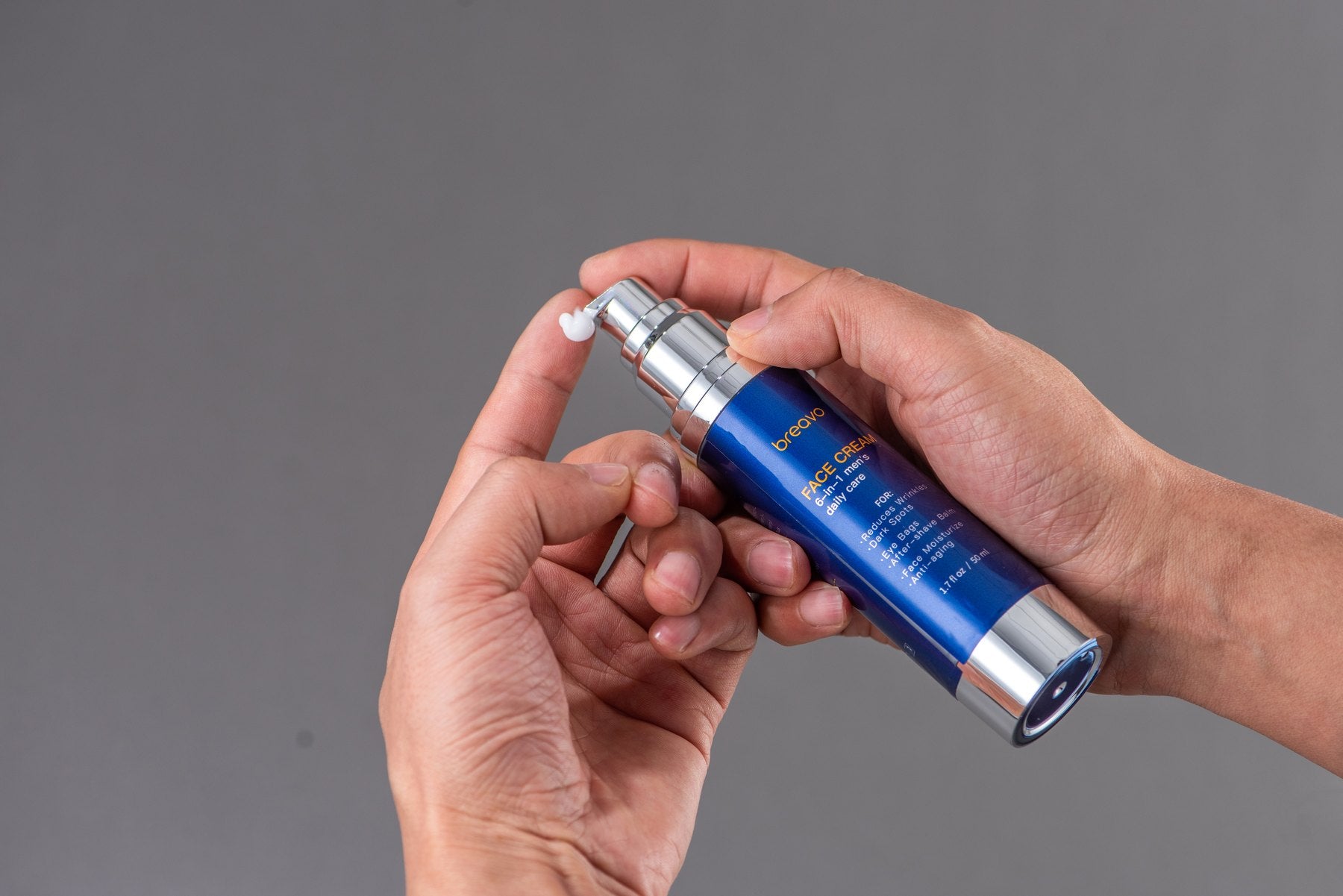
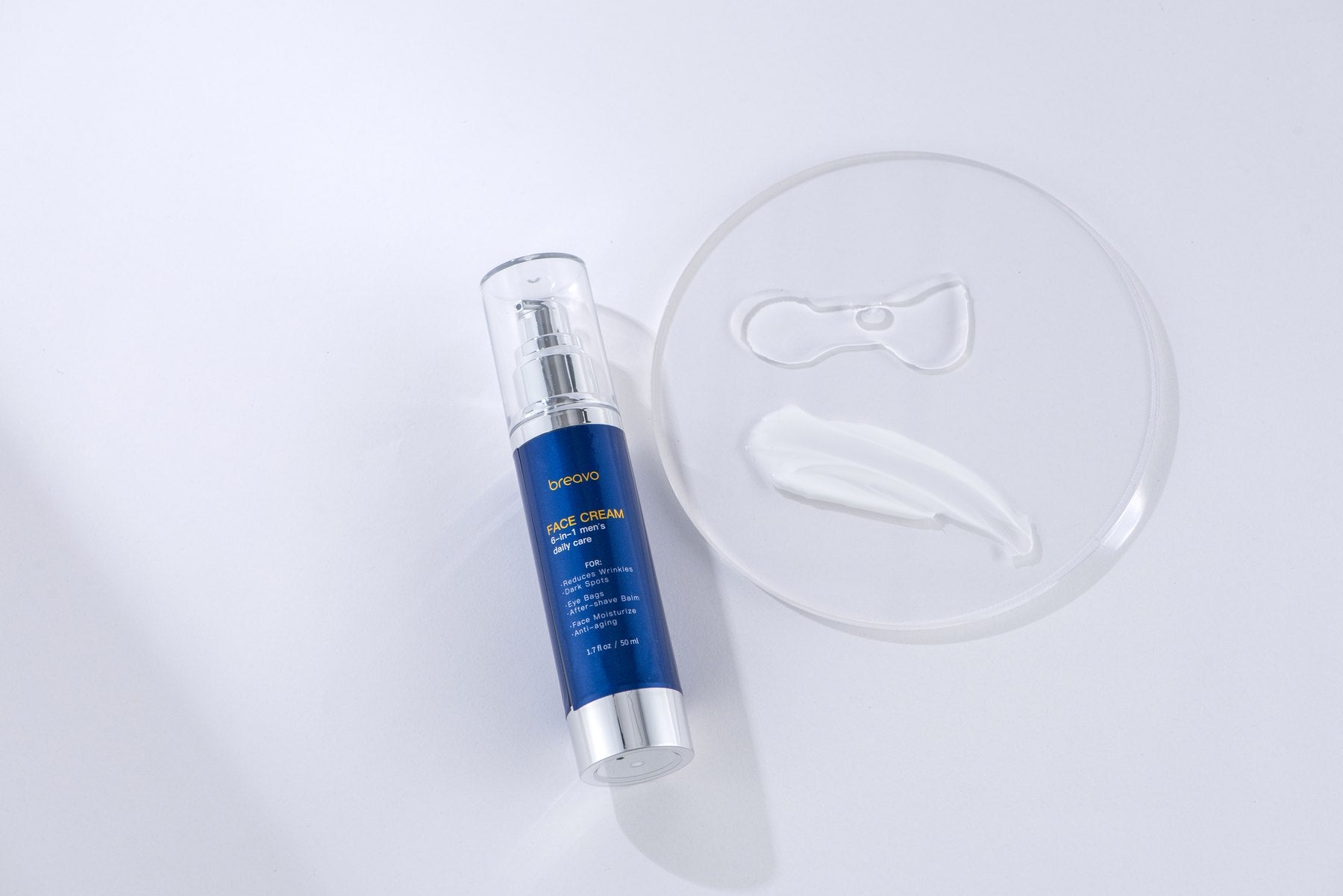
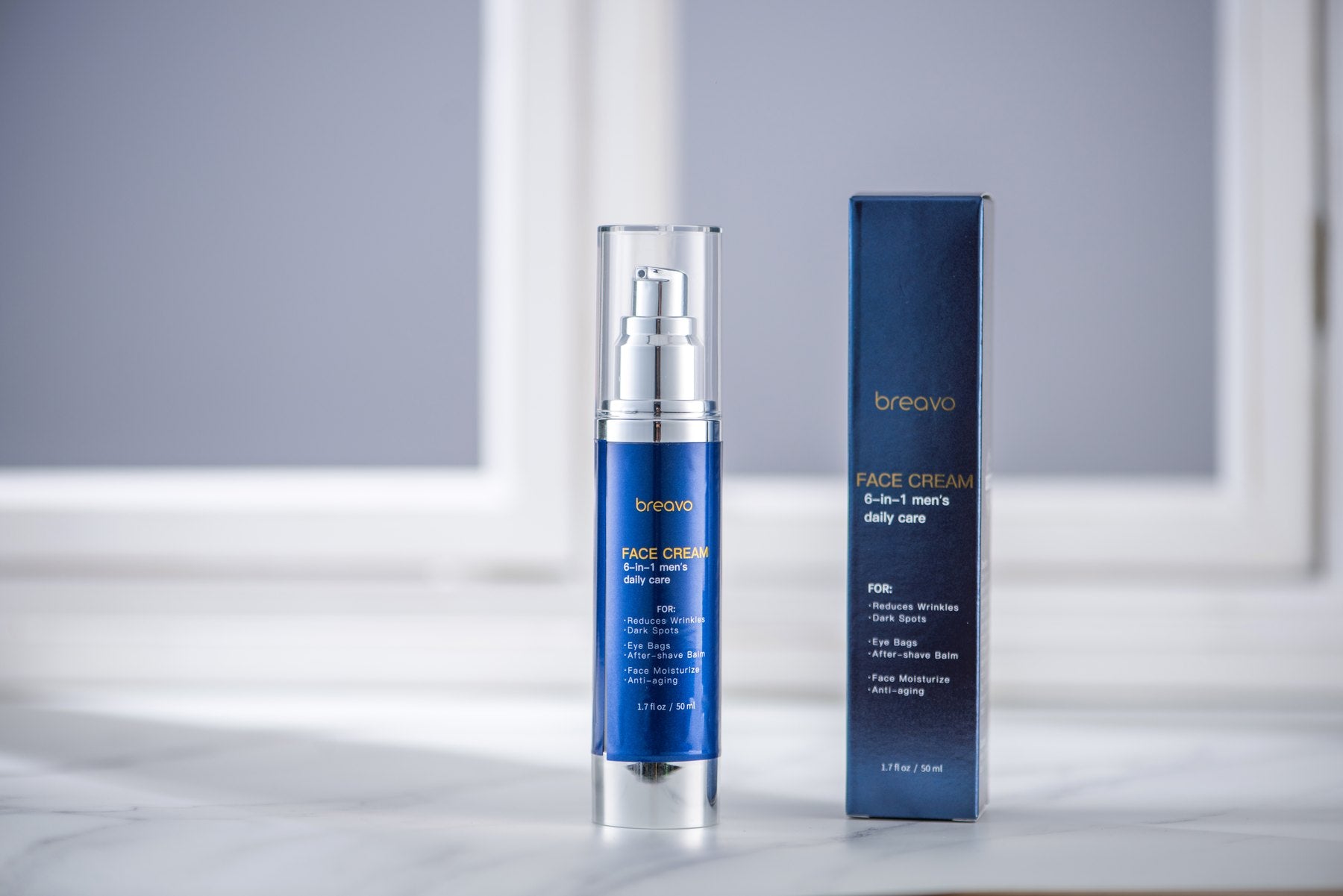
Breavo's 6-in-1 Face Cream exists for the routine above: one lightweight cream, morning and night, that also covers the post-shave step. Fast-absorbing, no shine, about fifteen seconds.
If you go through it quickly, the 2-pack works out cheaper per tube, with one for the counter and one for the bag.
Free US shipping on orders $29+. Ships from our US warehouse in 1–2 business days, backed by a 30-day return policy.
Related reading: Men's Skincare for Beginners · What to Put on Your Face After Shaving