If your face stings, feels tight, or looks blotchy after you shave, nothing is wrong with you. That's a normal response to what shaving actually does, and most of the products marketed for that exact moment are working against you rather than with you.
What does shaving actually do to your skin?
A razor has one job, which is to cut hair at the surface, but the blade can't distinguish between hair and the outermost layer of your skin, so it takes some of that layer too.
That top layer isn't dead weight; it's the part of your skin that holds moisture in and keeps everyday irritants out, and shaving it down means moisture escapes faster than usual while skin stays temporarily more reactive to things that normally feel fine. The first of those is the tight feeling. The second is why an aftershave that felt fine on your neck can burn along your jaw, where you probably went over the same spot three times.
None of this means shaving is bad for your skin. It means the ten seconds after you shave matter more than most men realize.
Why does classic aftershave make it worse?
Traditional aftershave splash is mostly alcohol, and that formula exists for a historical reason: barbers needed an antiseptic, and denatured alcohol was cheap and effective at being one. The sting came along with it and eventually became a marketing feature, so several generations grew up believing that burn was proof the product was doing its job.
Alcohol evaporates fast and takes moisture with it, which means that applying it to skin that just lost part of its moisture barrier compounds the exact problem shaving created. The immediate cooling does feel like relief, and not long after, skin often feels tighter than it did before you started.
If you like the ritual and the scent, that's a legitimate reason to keep using it. Just know you're buying fragrance rather than skin care, and follow it with something that puts moisture back.
What actually helps?
Rinse cool, not hot
Hot water feels good on a freshly shaved face and leaves it drier, so a cool rinse after your final pass is enough. You don't need ice water, and the folk wisdom about cold water "closing pores" isn't how pores work, but cool water is genuinely gentler on skin that just took a blade.
Pat, don't rub
A towel dragged across just-shaved skin re-irritates it, so press the towel against your face and lift instead. It takes two seconds and it makes a real difference on days when your skin is already unhappy.
Moisturize while skin is still damp
This is the highest-leverage step in the whole routine, and the one most men get slightly wrong by waiting too long before they do it.
Applying moisturizer to slightly damp skin gives it available moisture to hold onto, whereas waiting five minutes until your face is bone dry means working with less. The window is right after you pat dry, not later. A pea-sized amount covers the whole face, and more than that just sits on the surface and leaves shine.
Skip anything with a strong sting
If a product makes freshly shaved skin burn sharply, that's information worth acting on. Some tingle from menthol is normal and harmless, but a sharp sting on skin you just shaved usually means high alcohol content, and it isn't doing you a favor.
What matters more than the aftercare?
Most post-shave irritation is decided before the blade touches your face.
Shave after a shower, not before. A few minutes of warm water softens hair significantly, so the blade cuts rather than tugs, and if you can't shower first, a warm damp towel held against your face for a minute is a reasonable substitute.
Use a sharp blade. A dull blade doesn't cut cleanly; it pulls hair and scrapes skin, which means more passes over the same area, and a great deal of the irritation people blame on sensitive skin is really a blade that should have been replaced two weeks ago. If you're shaving daily, that's roughly every 5–7 shaves.
Go with the grain first. Shaving against the grain gives a closer result and asks considerably more of your skin, so if you get irritation regularly, try with-the-grain only for two weeks and see whether the trade-off in closeness is worth how your face feels.
The complete routine
Before
- Shower, or warm damp towel for 60 seconds
- Check the blade, and replace it if you're on the fence
During
- Shaving cream or gel, not soap
- Short strokes, with the grain, minimal pressure
- Rinse the blade often
After
- Cool rinse
- Pat dry, don't rub
- Moisturizer on damp skin, pea-sized
Eight steps sounds like a lot written out, but in practice the "after" section is about thirty seconds.
Where does a multi-function cream fit?
If you shave most days, your post-shave product and your daily moisturizer are doing overlapping work, and buying two separate things means an extra product on the counter and an extra decision every morning.
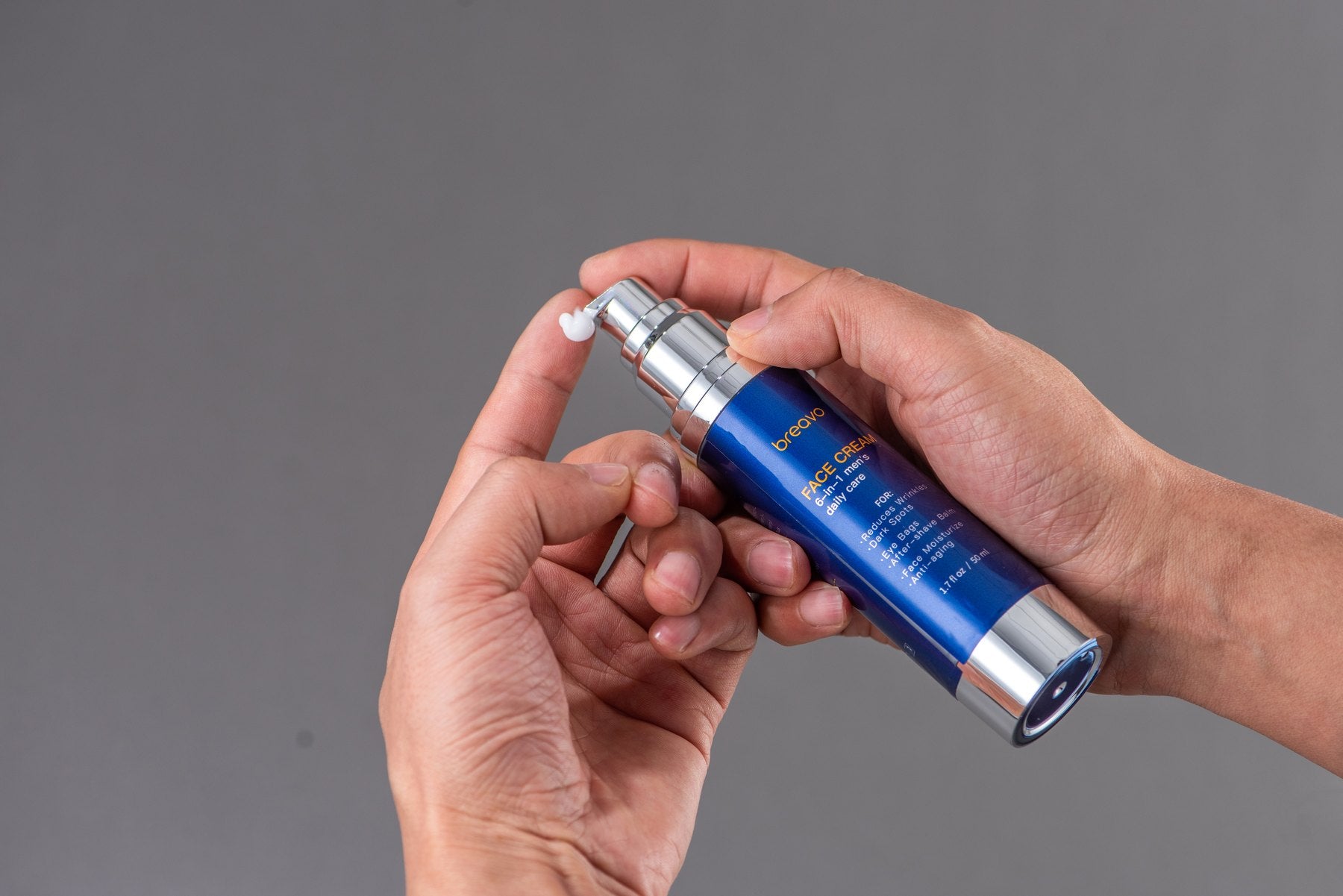
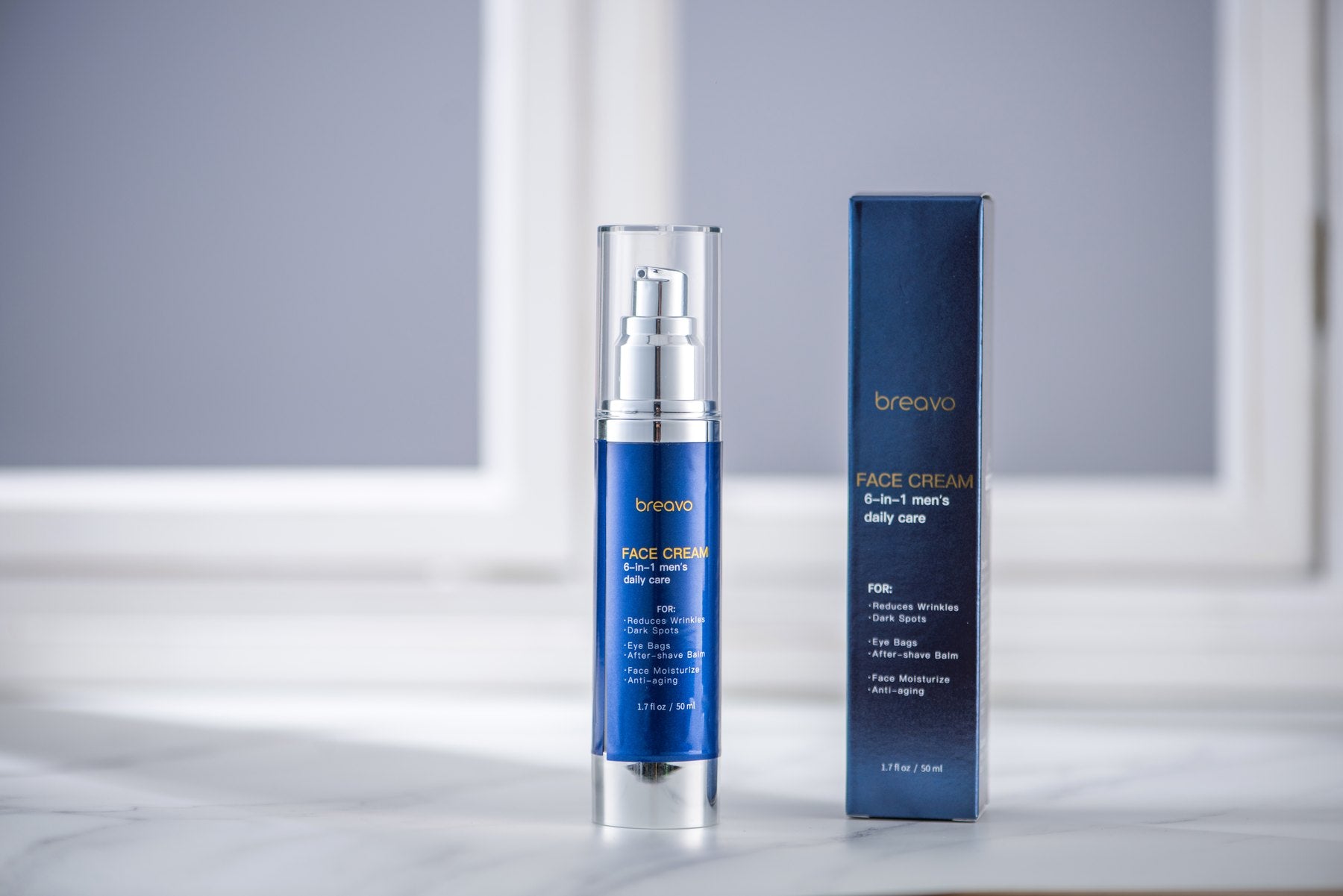
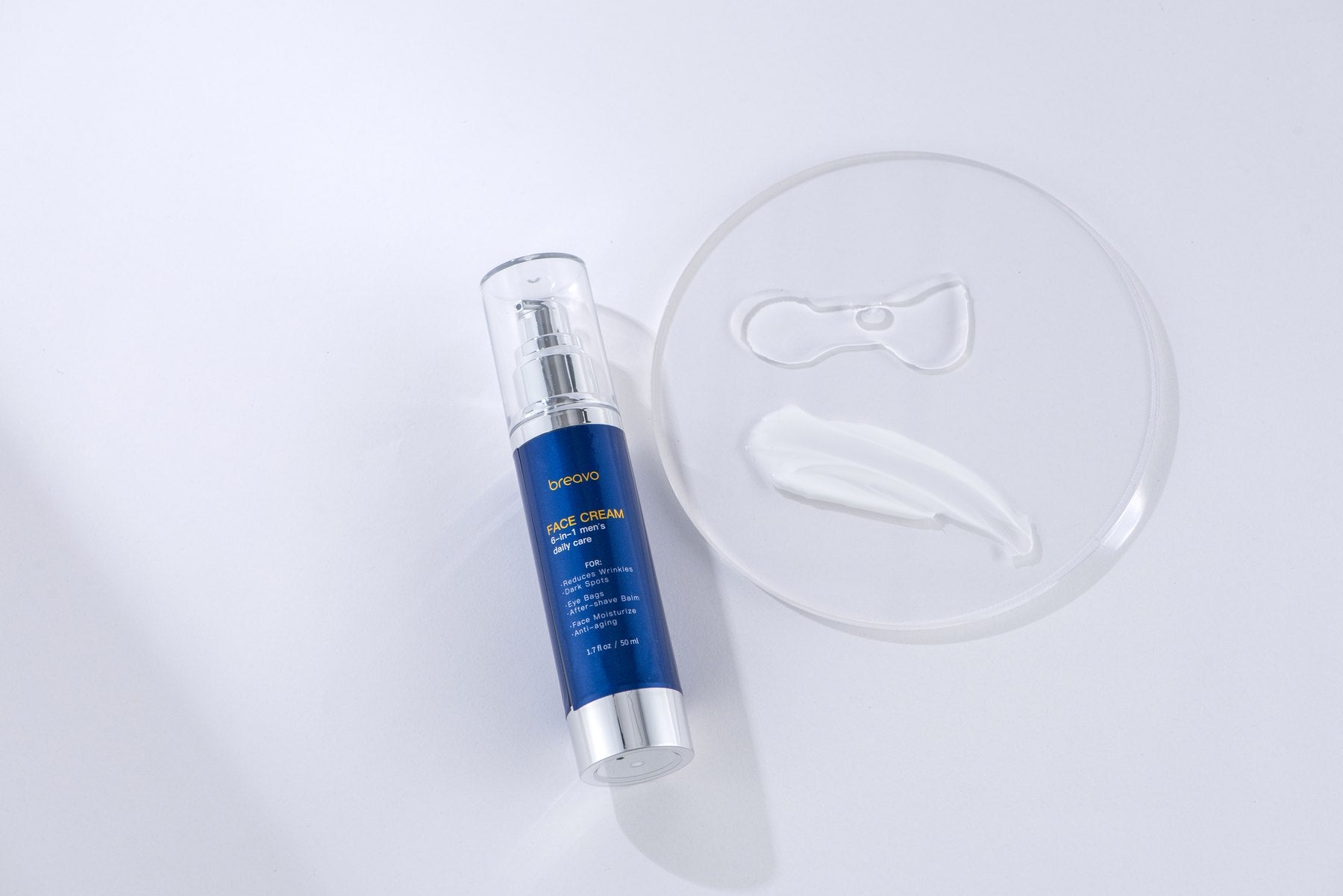
That's the case for a cream that covers both. Breavo's 6-in-1 Face Cream is built to be the step right after you pat dry: it hydrates, absorbs fast without leaving shine, and calms skin after a shave, morning and night, shaving day or not.
The practical argument isn't that one cream outperforms a shelf of specialists. It's that the routine you'll actually repeat every morning beats the better routine you abandon in March.
When should you stop and see someone?
Most post-shave irritation settles on its own within a day. Some things shouldn't be managed with a different aftershave, though, and it's worth knowing which: bumps that are persistent, painful, or spreading; redness that keeps getting worse over several days rather than better; any area that cracks, weeps, or bleeds. Those are worth a conversation with a dermatologist, and no moisturizer is the right answer to them.
Frequently asked questions
Is razor burn the same as ingrown hairs? No. Razor burn is the immediate irritation, meaning redness and a hot, tight feeling, that shows up right after shaving and usually settles within a day, whereas ingrown hairs appear later as small bumps where hair has curled back into the skin. Different timing, different causes.
Should I use aftershave or moisturizer? Moisturizer, if you're picking one. Classic alcohol-based aftershave is fragrance plus an antiseptic tradition and it doesn't put moisture back, so if you love the scent, use it and follow with moisturizer.
Electric razor: does any of this still apply? Most of it does. Electric shaving is generally less abrasive on the skin's surface so irritation tends to be milder, but the moisturizer step is still worth doing. Pre-shave prep matters less with electric, and many electric shavers actually work better on dry skin.
Why is my neck always worse than my cheeks? Hair on the neck often grows in multiple directions, which makes it easy to end up going against the grain without meaning to and easy to make repeat passes over the same patch. Slowing down on the neck and accepting a slightly less close result there is usually the fix.
How soon after shaving should I moisturize? Within a minute, while skin is still slightly damp, because that's when it does the most.
Free US shipping on orders $29+. Ships from our US warehouse in 1–2 business days, backed by a 30-day return policy.
Related reading: Men's Skincare for Beginners · The One-Step Skincare Routine for Men Who Keep It Simple